
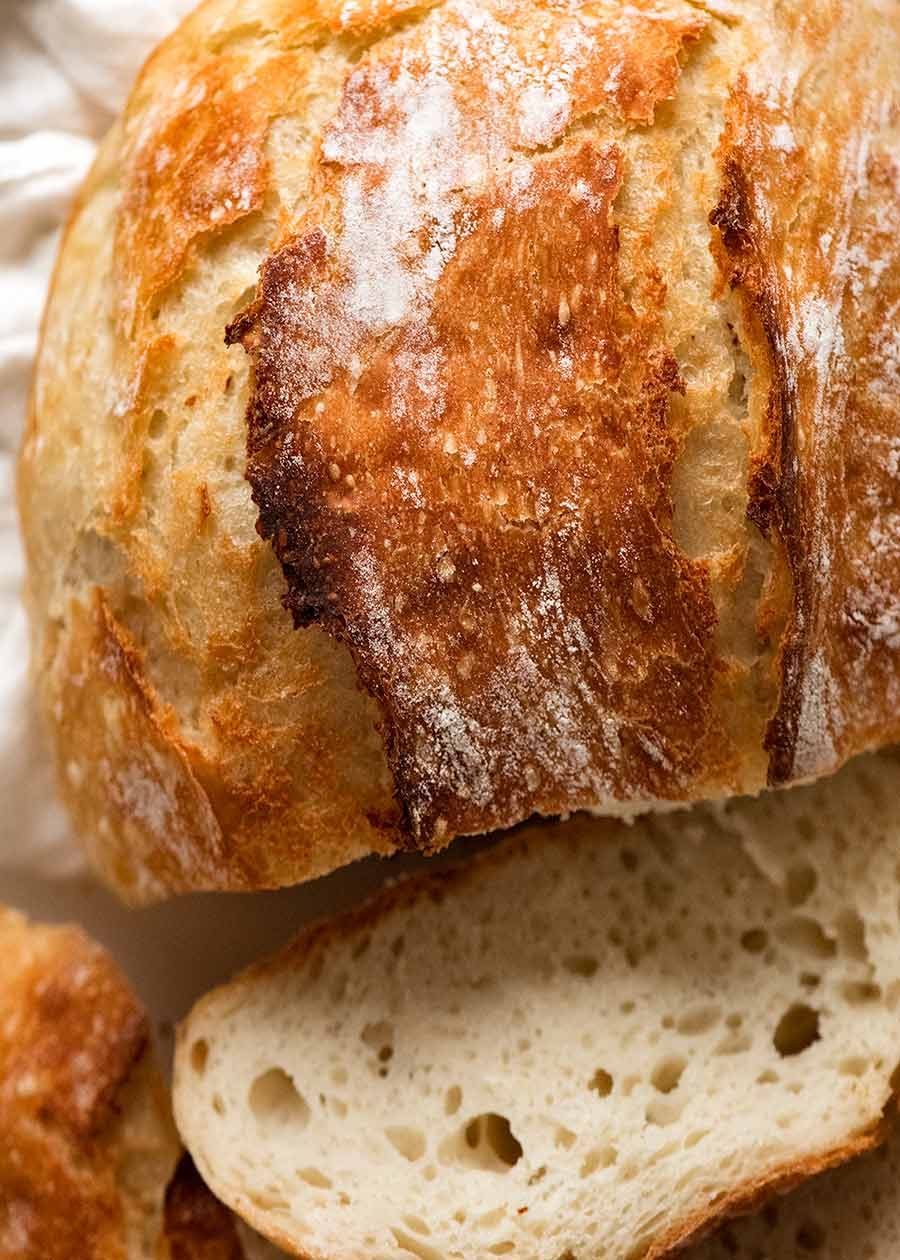
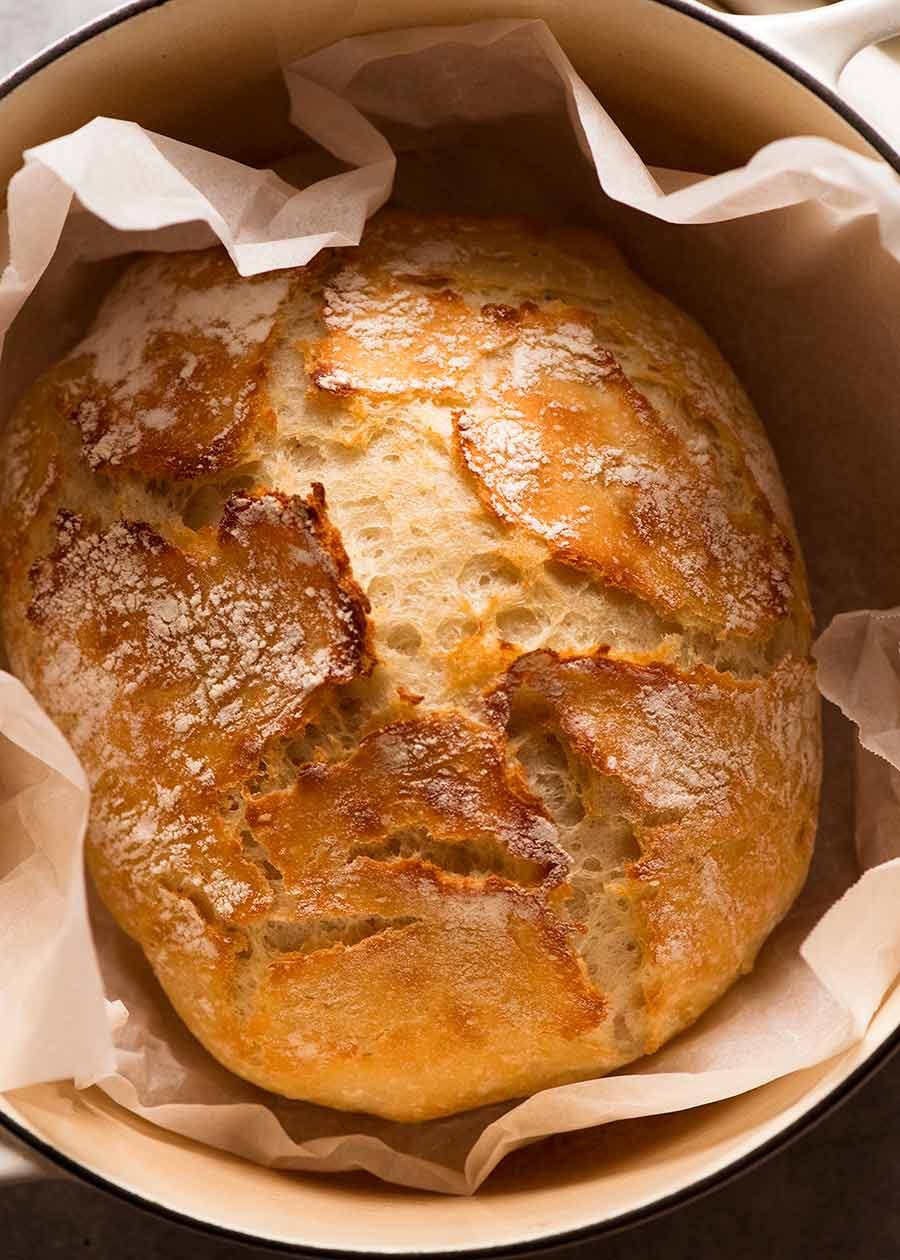
This is a phenomenal bread recipe. The best, EASY yeast bread you will ever make, beginners love how simple it is while bread connoisseurs appreciate the Artisan bread qualities – the thick crispy crust and chewy crumb with big fat holes like sourdough!
No knead, 3 minutes active effort, very forgiving recipe. Make this today, then the Cheese Bread version tomorrow!
Phenomenal EASY yeast bread recipe
This is an extraordinary white bread recipe with outstanding results. While it’s easy and forgiving, making it suitable for beginners, experienced bakers will recognise and appreciate the Artisan bread characteristics – large holes in the crumb like your favourite sourdough bread with that signature chewiness, and a thick, crispy crust.
It’s a gold nugget recipe, and you may never buy bread again after trying this!
Here’s why it’s so easy:
No knead, no stand mixer
3 minutes active effort – you won’t even get your hands dirty
Dutch oven (cast iron pot) ideal but not necessary
Incredibly forgiving dough, with rise times ranging from 2 hours to 3 days (yes, really, you choose what works for you)
Easy but yet no compromise on quality of bread
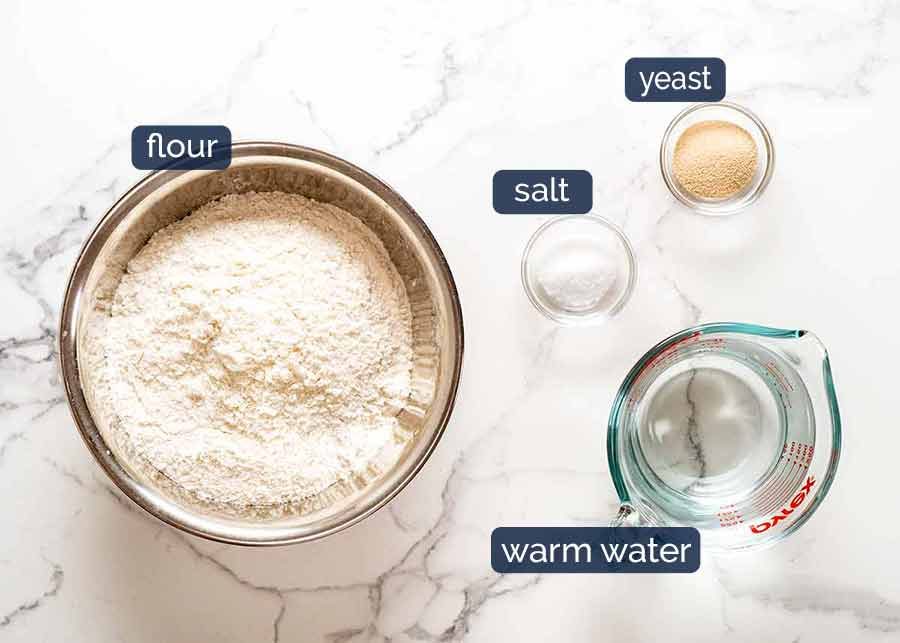
What you need to make this homemade bread recipe
Here’s what you need to make homemade bread from scratch – yeast, flour, salt and water. Yep, really, that’s it!
No yeast?
Make this famous Irish Soda Bread instead, or this incredible No Yeast Sandwich bread based on the traditional Australian Damper!
Yeast – my base recipe uses Rapid Rise or Instant Yeast which does not need to be dissolved in water. But it works just as well with normal yeast (“Active Dry Yeast” or just “dry yeast”) – you just need to change the order of the steps and dissolve the yeast in water first. The bread comes out exactly the same!
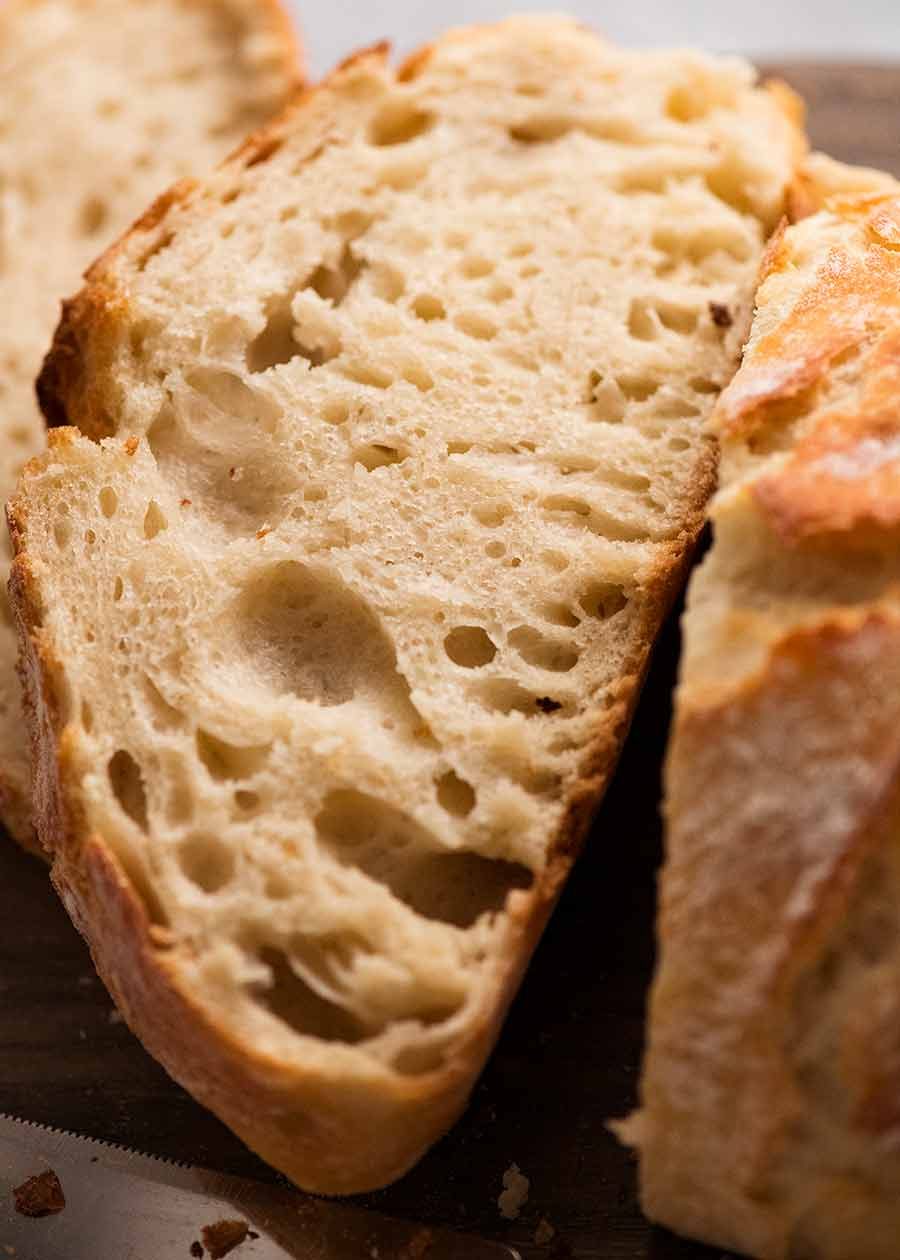
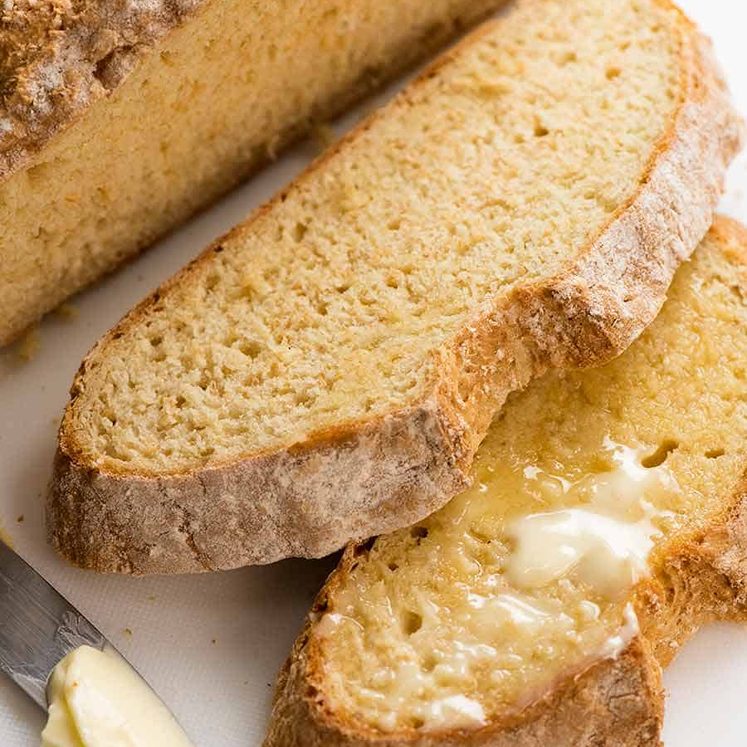
Best flour for homemade bread – use bread flour if you can. Bread flour has more protein in it than normal flour which means more gluten, and this makes the dough more elastic and yields a more fluffy yet chewy texture inside the bread, as well as creating the big holes you see in the photos, like sourdough bread. However, this bread is still spectacular made with normal flour too!
How to make the world’s easiest homemade bread – Artisan style!
Here are process steps with tips, but also see the video below – super handy to see the dough consistency, and how to form the dough.
1. Make wet sticky dough
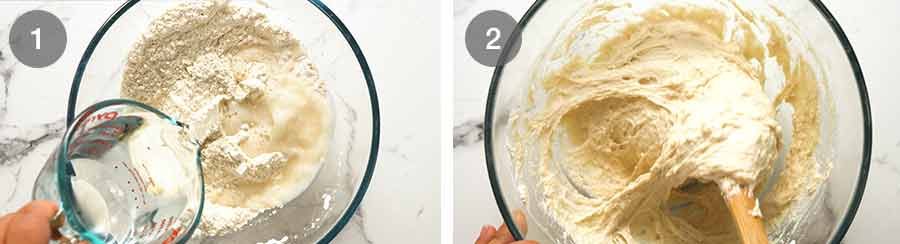
Mix together the flour, salt and yeast, then add warm water and mix. The “dough” will be very wet and sloppy, not kneadable at all – this is what you want! See video at 17 seconds for consistency.
2. Rise!
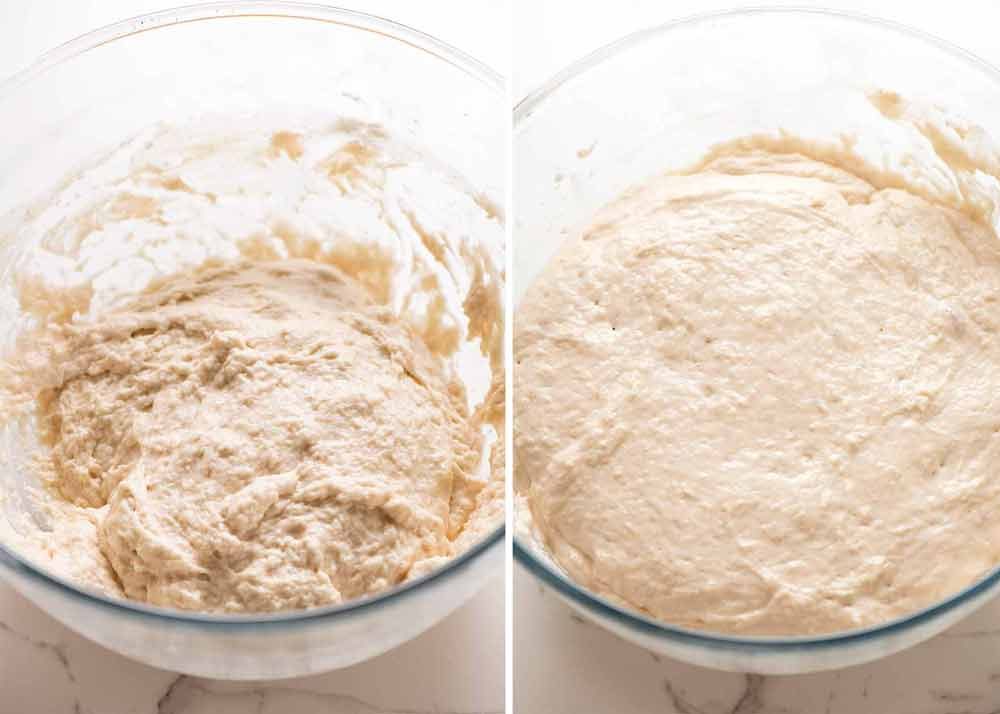
Cover with cling wrap then place it in a warm place (25 – 30°C / 77 – 86°F) for 2 hours. The dough will increase in volume by double or more, the surface will become bubbly and the dough will be wobbly, like jelly. See video at 24 seconds for consistency.
OPTIONAL – develop flavour: Once dough has risen, you can bake immediately. OR, for better flavour, refrigerate for a minimum of 8 hours, up to 3 days. Time = better flavour development.
Bread in photos and video were baked immediately. I usually make this dough in the morning, refrigerate all day then bake in the evening. Or make the dough in the evening, refrigerate overnight and bake fresh in the morning! (10 – 12 hours in fridge). Beauty of this bread is that you can bake anytime!
No dutch oven? No problem! Just bake it on a tray – see the recipe notes.
3. Preheat oven & pot
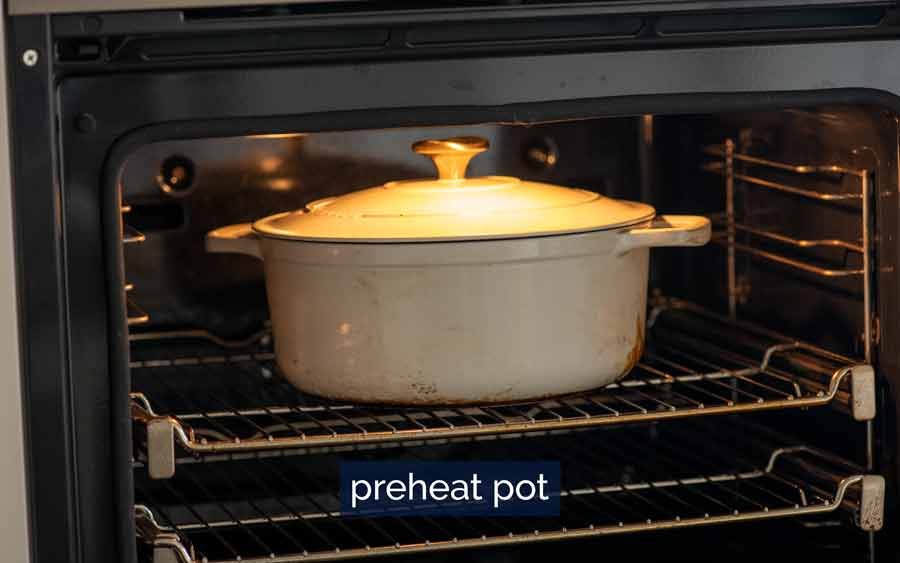
30 minutes before dough has risen, or while refrigerated dough is coming to room temperature, place dutch oven (cast iron pot) in the oven to preheat at 230°C/450°F.
Hot oven + hot pot = bread rising boost!
4. Scrape dough out
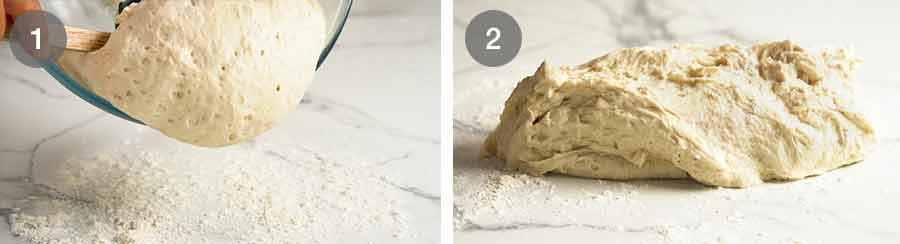
Scrape dough out of bowl onto floured work surface. It will be wet and sticky and that’s exactly what you want – because we will not be kneading it! In fact, you won’t even touch it with your hand.
PRO TIP: Dough handling and shaping technique devised to minimise addition of flour. Less flour = wetter dough = bigger air pockets, fluffier bread and more moist.
5. Shape the dough very roughly
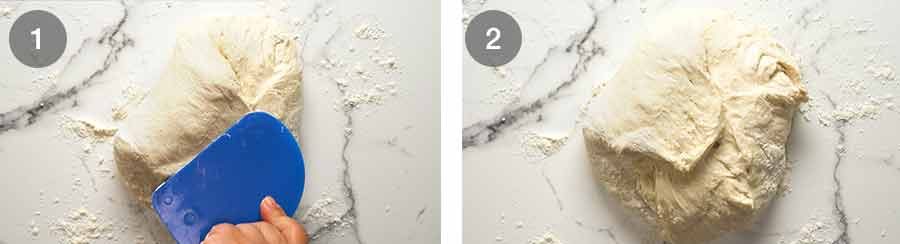
Use a dough scraper or anything of similar shape (spatula, cake server, or large knife) to fold the sides in so it roughly resembles a round disc.
Don’t get too hung up on the shaping – you’ll deform it in the next step!! This step is mainly to deflate the dough.
6. FLIP dough upside down onto paper
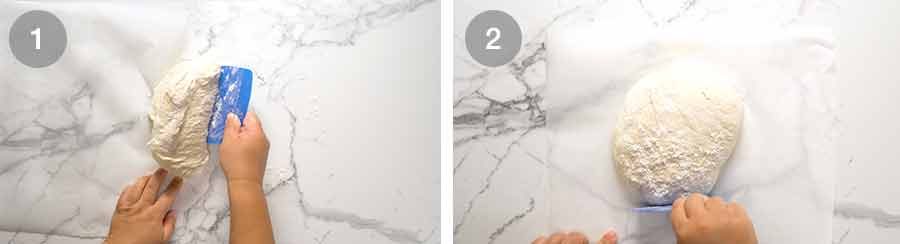
Slide a large piece of baking / parchment paper next to the dough, then flip it upside down onto the paper using the scraper so the seams from the step above are face down, and you have the smooth side up.
Slide/push the dough into the centre, then briefly reshape it into a round or slightly oval shape.
Do not get too hung up on a neat shape – this bread is supposed to be rustic! Besides, scruffier shape = more awesome crispy ridges
7. Prepare to bake!
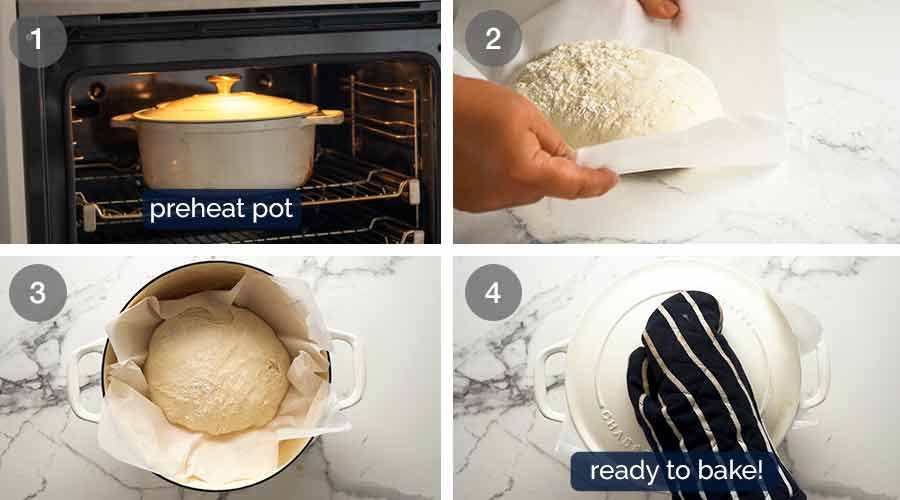
Remove very hot pot from oven, then use paper to pick up the dough and put it in the pot, and put the lid on.
See recipe notes for no dutch oven method.
8. Bake!
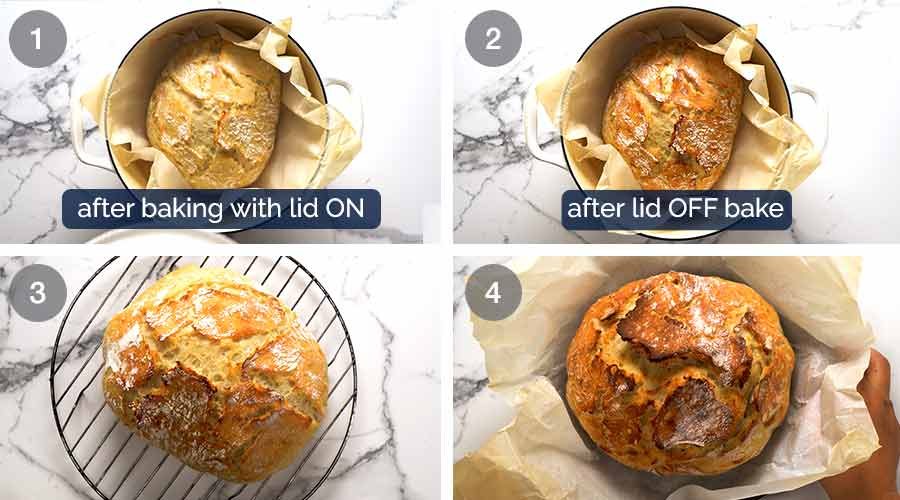
Bake for 30 minutes with the lid on (this creates a steamer effect, allowing the bread to rise while it cooks before crust sets), then 12 minutes with the lid off to brown and crisp up the crust. The surface will crack – and you want this, for extra crispy ridges!! And it looks authentic, just like the Artisan bread you buy at bakeries. 😇
Cool for 10 minutes before slicing. This is important – to let the centre of the bread finish cooking (if you slice too early, it will seem a bit doughy. Patience was never my greatest virtue, so I learnt this first hand!)
Remember – you can make this bread recipe WITHOUT a dutch oven!
Why this bread recipe works – and TIPS!
Loose, sticky dough = easier to rise than firmer dough.
No kneading = rough dough, but because the dough is so soft, it puffs up enough to “smooth out” the roughness.
Super forgiving dough – too stiff, add water. Too wet, add flour. Dough not rising? Move it to a warmer place. Takes 45 minutes to rise or 5 hours? It will still work. As long as your dough is the same consistency as what you see in the video and you let it rise to double the volume, this bread recipe will work as long as the yeast is not past its expiry date!
Why you need a preheated dutch oven for no knead bread recipes – to create a steamy environment to give the bread a rise boost before the crust sets (which stops the bread from rising). Professional bakeries are equipped with steam ovens – the cast iron pot is the home method!
Don’t have a dutch oven? No problem! Recreate the steamy environment by placing hot water in a pan in the oven, and bake the bread on a tray.
Big holes in the crumb – loose dough from less flour, high oven temp and preheated pot allows the yeast to give the bread a great rise boost, creating big air pockets. Also the use of bread flour rather than normal flour helps – you get less large holes using normal flour.
Bake immediately if it’s a bread emergency….
…but you’ll be rewarded with tastier bread if you leave the dough 8+ hours in the fridge! I normally make dough first thing in the morning (it takes 3 minutes!) then bake that night. Or make dough at night and bake in the morning. (~12 hrs in fridge for both scenarios)
Why refrigerating the dough creates a better tasting bread – because the fridge slows down the fermentation of the yeast (ie dough stops rising, if it kept rising it would kill the rising power of the yeast), allowing the enzymes in the yeast to do their work, transforming starch into sugar which creates a more flavourful bread. So we let the dough rise first, then refrigerate it.
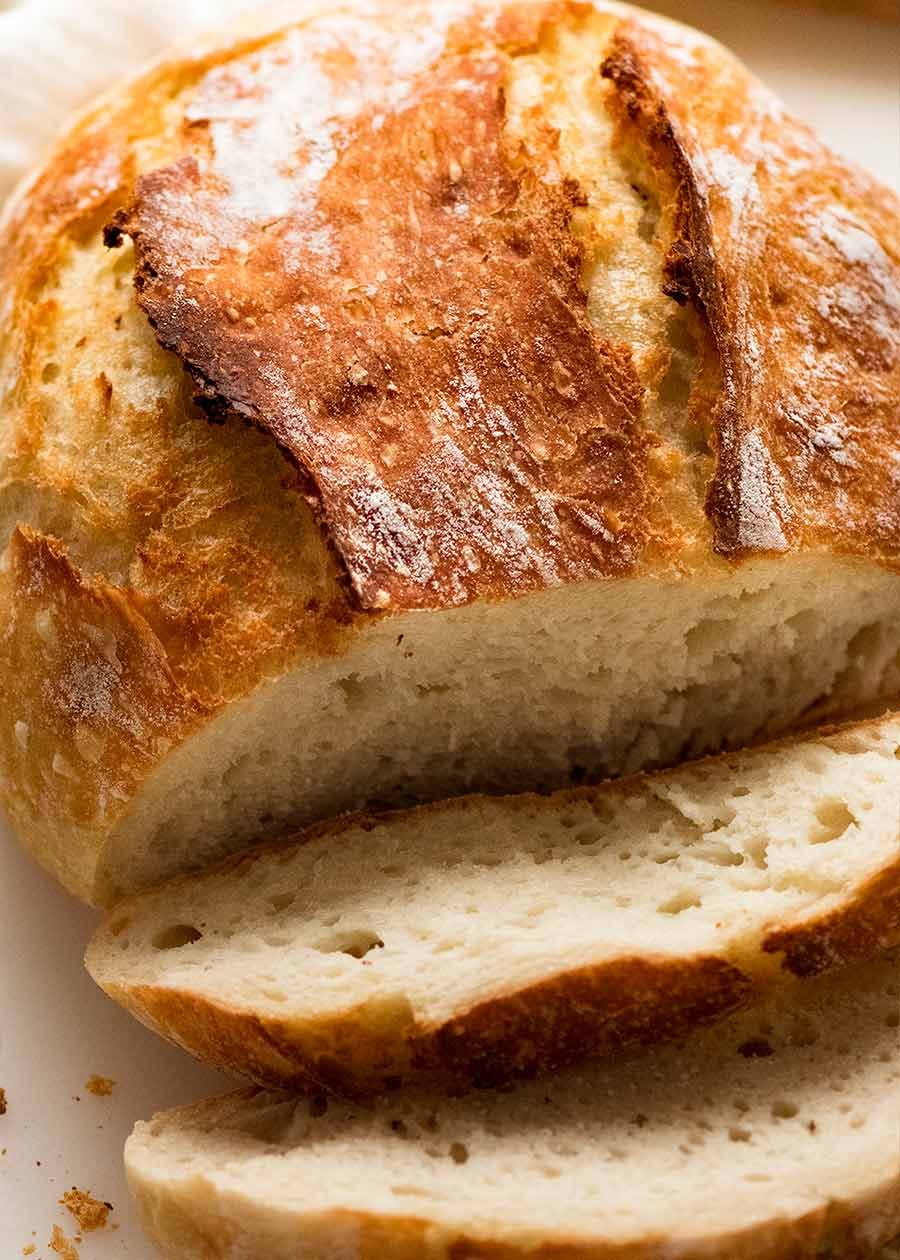
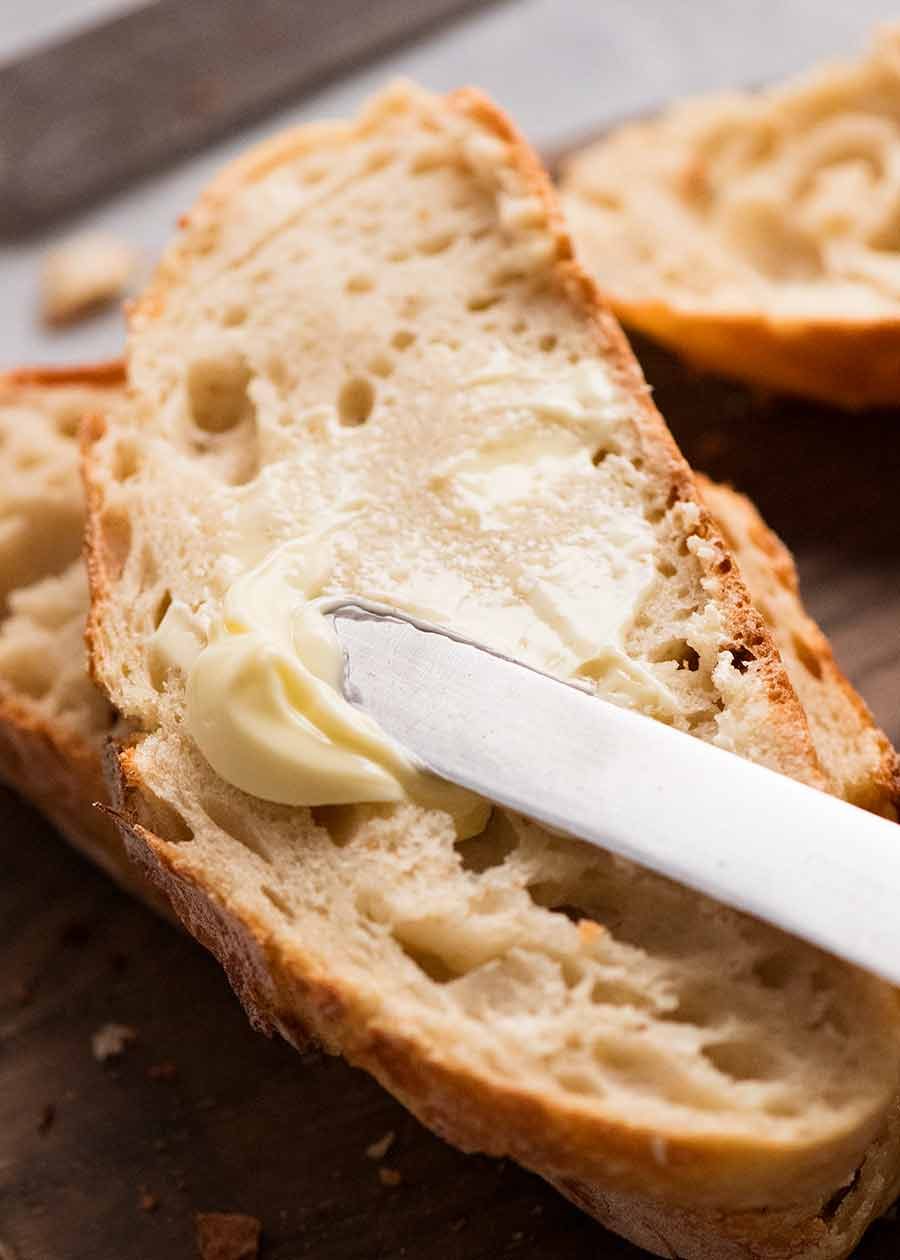
All the ways to eat this bread!
Everything you do with bread you buy, you can do with this bread. It truly has the structure of bakery bread, so there are no limits!
Eat it fresh out of the oven, slathered with butter. Make sandwiches, toast it, mop plates clean, dunk it in soups and stews. Make bruschetta, garlic bread, grilled cheese, CHEESY garlic bread or Cheese and Garlic CRACK Bread!
I hope you enjoy this crusty bread recipe as much as I do. This really is one of those gold nugget recipes that you’ll make once and treasure forever! – Nagi x
Watch how to make it
Hungry for more? Subscribe to my newsletter and follow along on Facebook, Pinterest and Instagram for all of the latest updates.
World’s Easiest Yeast Bread recipe – Artisan, NO KNEAD
Ingredients
- 3 cups (450g) flour , bread or plain/all purpose (Note 1)
- 2 tsp instant or rapid rise yeast (Note 2 for normal / active dry yeast)
- 1 1/2 tsp cooking salt / kosher salt , HALVE if using table salt (Note 3)
- 1 1/2 cups (375 ml) very warm tap water , NOT boiling or super hot (ie up to 55°C/130°F) (Note 4)
Dough shaping
- 1 1/2 tbsp flour , for dusting
Instructions
- Mix Dough: Mix flour, yeast and salt in a large bowl. Add water, then use the handle of a wooden spoon to mix until all the flour is incorporated. Dough will be wet and sloppy – not kneadable, but not runny like cake batter. Adjust with more water or flour if needed for right consistency (see video at 17 sec, Note 5).
- Rise: Cover with cling wrap or plate, leave on counter for 2 – 3 hours until it doubles in volume, it’s wobbly like jelly and the top is bubbly (see video at 24 seconds). If after 1 hour it doesn’t seem to be rising, move it somewhere warmer (Note 6).
- Optional – refrigerate for flavour development (Note 9): At this stage, you can either bake immediately (move onto Step 5) or refrigerate for up to 3 days.
- Take chill out of refrigerated dough – if you refrigerated dough per above, leave the bowl on the counter for 45 – 60 minutes while the oven is preheating. Cold dough does not rise as well.
- Preheat oven (Note 7) – Put dutch oven in oven with lid on (26cm/10" or larger). Preheat to 230°C/450°F (220° fan) 30 minutes prior to baking. (Note 8 for no dutch oven)
- Shape dough: Sprinkle work surface with 1 tbsp flour, scrape dough out of bowl. Sprinkle top with 1/2 tbsp flour.
- Using a dough scraper or anything of similar shape (cake server, large knife, spatula), fold the sides inwards (about 6 folds) to roughly form a roundish shape. Don’t be too meticulous here – you’re about to deform it, it’s more about deflating the bubbles in the dough and forming a shape you can move.
- Transfer to paper: Slide a large piece of parchment/baking paper (not wax paper) next to the dough, then flip the dough upside down onto the paper (ie seam side down, smooth side up). Slide/push it towards the middle, then reshape it into a round(ish) shape. Don't get too hung up about shape. In fact, lopsided = more ridges = more crunchy bits!
- Dough in pot: Remove piping hot dutch oven from oven. Use paper to place dough into pot, place lid on.
- Bake 30 minutes covered, then 12 minutes uncovered or until deep golden and crispy.
- Cool on rack for 10 minutes before slicing.
Recipe Notes:
- Fridge up to 3 days – Rise dough per recipe, then leave in bowl and refrigerate up to 3 days. Flavour gets better with time. Dough will stay bubbly for a day or two, then will deflate – that’s fine. Shape into round and place on paper per recipe, then leave for 45 – 60 minutes to take the chill out of it, then bake per recipe. Cold dough won’t rise as well.
- Bread in photos & video is 2 hr rise, immediate bake.
- Cooked bread – great fresh for 2 days, then after that, better warmed or toasted. Keep in an airtight container or ziplock bag. This stays more fresh than usual homemade bread, especially if you use bread flour.
- Freeze cooked bread for up to 3 months.
Nutrition Information:
More bread recipes




Life of Dozer
Just keeping a close eye on it for me….

Good job Dozer. Here’s your treat. Look, I even buttered it for you! (PS He’s in his robe because it’s a rainy day yet I still took him to the beach!!!)

Thank you for this recipe! It’s my first time making bread and I was so scared to even attempt it. But your recipe is so user friendly!
My family love the bread and want me to make it everyday!
This bread really is phenomenal and with so little effort. It’s surpassed all my expectations 😊. It turned out exactly as described. The texture is first class and the taste delicious and very moreish.
I have just got a new oven: I waited 5 years for it! My Hubby wants me to make this bread every 2-3 days and not buy bread from the shops in town any more: So Yummy.AS always Nagi’s recipes win. I also have both her cookboks
After struggling with sourdough bread for a couple of years I decided to try your crusty loaf, as a result no more lengthy temperamental sourdough! This was so easy and tastes sensational! Thank you.
Ok this was my first ever attempt at making bread and I’m very pleased with the results! It’s delicious! I used a Dutch oven and parchment paper. I did the 2 hour rise and baked immediately. I will be making this bread again and look forward to trying some add ins like fresh garlic! Thank you!
Can I double this recipe? I have a big dutch oven.
Best recipe every. Family loved it. 10 stars
I love this bread as well as my family. For a bit more flavor I add poppy seeds on top before baking! Yummy!
I make this bread at least once a week and it never fails. My family doesn’t even like store bought bread anymore. It’s soooo easy and so delicious. We like adding ingredients to switch it up too. Our favorites are garlic cheddar and pistachio crasin. Whenever I make this bread for people they ask if it’s sourdough because of how good the texture is, thank you for this recipe!
Do you add minced garlic, or garlic powder? And do you add it right into the dough as you’re mixing it?
When do you add the add-ins?
Hi at what stage did you add the flavor ingredients?
Hi Andrea! Can you please tell me how you added the other ingredients? I want to do a garlic cheddar and also a sweet version. Did you add sugar when you did the pistachio craisin? Thank you!
After struggling in my early sourdough journey, I decided to find a yeast-based dough for homemade bread, when I found this recipe. I must say that the bread turned out absolutely delicious! I’m far from being a baker, and the result is as good as any bread you buy – except tastes better and doesn’t have all the preservatives. Love it! Can’t wait to make this recipe every week; I’m no longer buying bread. Wish I could add a photo!
Awesome bread. Looking forward to variations of this recipe. Perhaps cheese or garlic. Not sure. Just great ad is. First time making g as was great.
Love the ease of the recipe! One thing though, and I’m stunned that I am not seeing any commentary that might have warned me: I do believe there is a misprint of the amount of flour. 3 cups = 360 grams of flour. 450 grams is too much! I’m sure of this, because I did it this way initially and my dough was more like partially-set cement–looked nothing like the photos or video. Tossed that, and used 360 grams–picture perfect.
I had the same problem but added more water to thin it out – about 1/3.
It came out almost like the video. But it tastes great and has great texture.
You are 100% correct about the misprint. I used bread flour and the weight was way too much.
Thank you for this! Mine was drier than I felt it should be. Turned out good, but next time I’ll do the 360 grams & I bet it’ll be perfect. Thank you!!
Yes to this! I’ve been using this recipe for a year and it’s always been a bit too stodgy but today for the first time in ages I looked at the recipe again and the 450g (3 cups) tripped something in my head! I use metric and the equivalency issue gave me pause but I just put it down to Imperial craziness! But you’re right. Too late for this batch cause I used 450 but next time I’m using your measurements and I bet it’s going to be great! Thank you for scratching an itch in the back of my head!
I agree that using 450 grams of bread flour is way too much for 1-1/2 cups of water. Yields a thick dough. 120-125 grams per cup is more reasonable.
I’ve made the bread several times since that initial foray into Cement-doughland, and am happy to report that 360 grams bread flour to 1 1/2 cups (US) water works perfectly. And–I found where I strayed from the path! If you’ll look at the Notes above, #10 says to use either weights OR cups. I mixed and matched, using both (weight for flour, cups for liquid), so that’s all my doing, no misprint. It’s really good bread–try it if you haven’t already!
Thank you! I’m making this to show children the work that yeast does. A dense bread would not be ideal 🙂
Oooo, I wish I was in your class! The closest thing I ever got to such a tasty lesson was in the 1970s when the US was considering changing to metrics, we made ‘chocolate chipper-grams’ and ‘Kool-o-gram Aid’. Best elementary school day, ever. Bet your kids loved the bread! Next you can show them what cream can do–make some ‘shake it’ butter to go with their bread, and some ‘shake it’ ice cream for dessert. You’ll be up for teacher of the year!
No, you were right the first time. It is a misprint and should say 360 g. We weight flour because it settles and using a measuring cup can be very inaccurate. There is no such issue with measuring water.
I did my best to adjust all other ingredients to compensate for the 450 g flour, but it was still very dense. I am going to try again.
Oh, I hope you have (or will) try again! It’s so delicious for such little effort and few ingredients! However–in a previous reply, I did ‘fess up to where I made my mistake–because it was my mistake. In Nagi’s Note #10 following the body of the recipe, she instructs to use either cups *or* grams–and warns not to mix and match. I did not read that Note til after I messed up! So, 450g flour probably is correct for the ml of water listed in the recipe, but will be too much if used with the cup measurement of water. Does that make sense? I think part of the confusion is that AU cups and US cups are not exactly the same, so that’s why she cautioned against the mix’n’match method of following the recipe. Anyhow–hope that clarified a bit.
Are you making 100% hydration bread??? don’t take this advice. the recipe is for an 80% hydration dough judging from the grams and mls, you do NOT need less flour. crazy advice.
Hahaha! I don’t know what % bread I made, other than 100% tasty after I found and fixed my error. I ‘fessed up in a couple of earlier replies that in Nagi’s Note #10, she warns not to mix the measurements of the ingredients–for example, mine of using 450 grams of flour and 1 1/2 cups of water. I didn’t read that Note til after I’d made Disaster Dough. So, I converted 3 US cups (might also make a difference; I think US and AU cups are different) to grams (360) and used the specified 1 1/2 cups of water. Much better! Looked exactly as the photos and video showed and tasted even better. I’m glad I persisted with the recipe and found where I’d strayed, because it is a dandy–I make it a couple of times each week since finding it.
I have tried two types of flour, two types of yeast, and still can’t get a good loaf. It’s either too dense or too runny and doesn’t form.
What a huge difference in taste and texture using bread flour and letting the dough rise overnight in the fridge! Absolutely fabulous!
I used a loaf pan. My bread was dark brown after 15 minutes. I put a tented piece of foil on it. Should I reduce the heat from 450 next time?
Great recipe adaptation! This was extremely simple and even though I made some changes (not all were on purpose lol) it still came out delicious! I used AP flour with about 3 teaspoons of vital wheat gluten instead of bread flour and the loaf came out just as soft and chewy on the inside and perfectly crusty on the outside. I also accidentally used active dry yeast instead of instant and didn’t see any major issues.
This is a wonderful recipe. When I think of all the time I’ve spent kneading and rising etc. This is delicious! Today I made yogurt, and have whey left over from straining it. I’ve substituted whey for water in this recipe. We’ll see how it turns out, but I’ll bet it will be good.
The bread cooked perfect
A recipe that worked!! Thanks!!
Holy cow!!! This bread is SO delicious!! It is absolutely amazing out of the oven and has a wonderful crust. It was so easy to make too! I let my dough sit in the fridge for three days (kinda forgot about, 😂) and the flavor was amazing. Great with butter and honey, but also with soups!
Thank you! I really like this recipe as is, but was wondering if it was possible to sub the salt for a salt substitute for those looking for a lower sodium option. Anyone tried this?
The salt in bread is necessary for the chemical reaction that makes the bread rise and stay “up.” I’m low sodium and have never found a low sodium alternative for homemade bread. I just ration the amount of bread I consume and count the sodium in with my daily allowance.